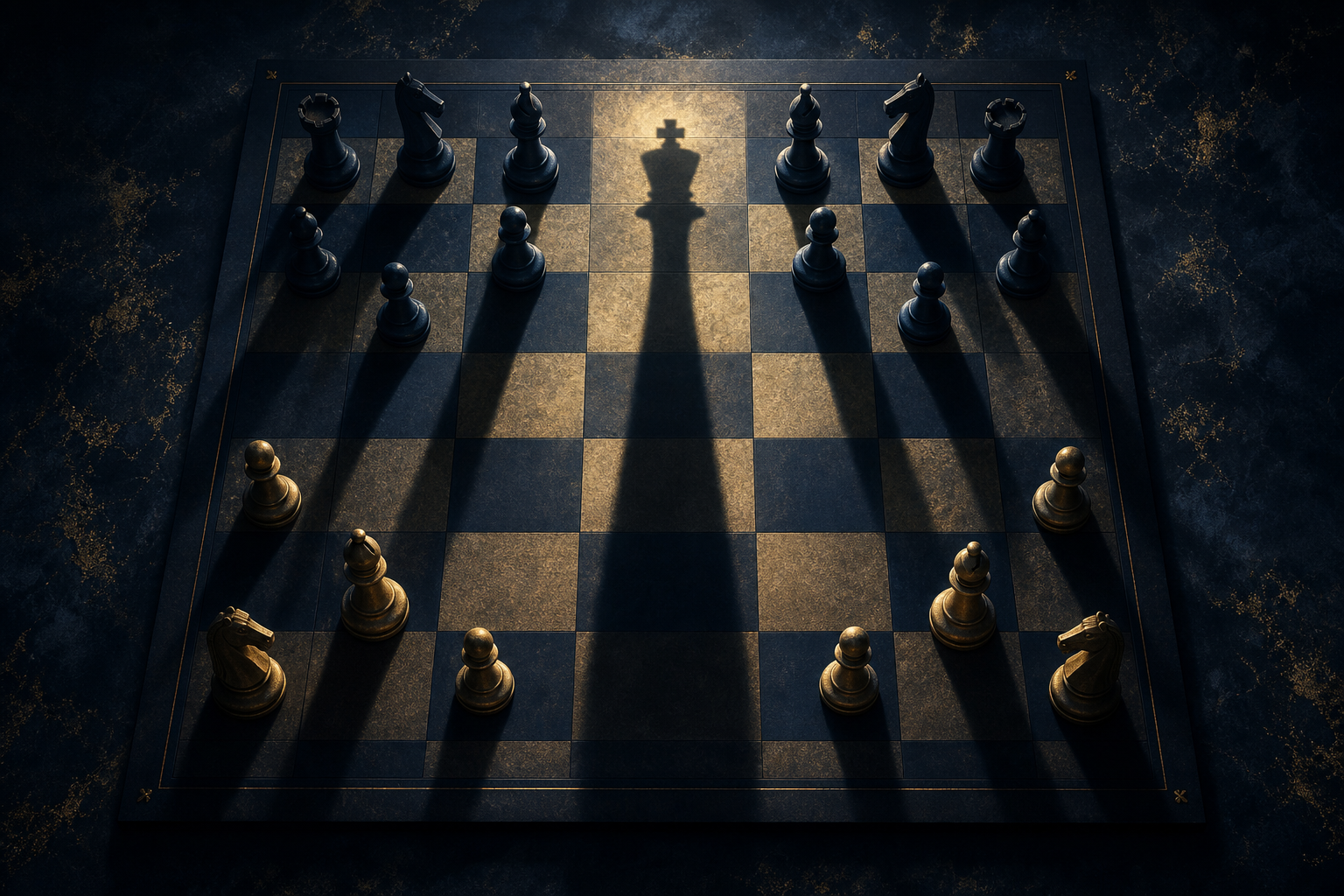
In September 2025, a White House dinner gathered the most powerful faces in tech: David Sacks, who oversees U.S. cryptocurrency policy, Meta founder Mark Zuckerberg, OpenAI CEO Sam Altman, and Figma CEO Dylan Field.
But if you look closely at the backgrounds of everyone present, you’ll discover a striking common thread
They all have direct or indirect ties to one person — yet that person wasn’t there.
David Sackswas his old comrade from thePayPaldaysZuckerbergprofited from his early investmentDylan Fieldwas a protégé funded by his fellowship.
These people command enormous influence across Silicon Valley and Washington, yet the invisible godfather behind the scenes, Peter Thiel, publicly declined every full-time government position offered to him.
He doesn’t need to be present, yet he is omnipresent.
How exactly was this “presence through absence” cultivated?
Seven Schools in Seven Years: How Was His Sense of Control “Uprooted”?
Peter Thiel was born in 1967 in Frankfurt, Germany. At age four, he emigrated with his family to South Africa, then moved again to what was then South African-administered Namibia. They settled in a small town called Swakopmund.
Because his father was a chemical engineer working in mining construction, wherever the mine was, the whole family had to move. In just seven years, Peter Thiel was forced to change schools seven times. Each move meant abandoning hard-won friend groups, readapting to new social rules, and once again becoming “the new kid with a different accent.”
At the German-language school in Namibia, he endured near military-style discipline — uniforms impeccable, corporal punishment routine.
He once stated bluntly: “That experience planted in me a lifelong hatred of ‘conformity’ and established rules.”
When a child has absolutely no control over his own life — unable to decide where to live, which school to attend, or who his friends are — what does he do?
Peter Thiel’s answer was: retreat into intellectual games and build his own fortifications.
How Did Three “Parallel Worlds” Build His Power Prototype?
In those youthful years when he couldn’t control reality, Peter Thiel found three refuges, each teaching him a fundamentally different logic of power.
Chess: Pursuing Ultimate Control Within Rules, But Shattering at the Slightest Touch
In 1972, American chess prodigy Bobby Fischer defeated Soviet chess champion Boris Spassky, igniting a nationwide chess craze that also swept up the young Peter Thiel.
For him, chess wasn’t just a game — it was the only world completely governed by intellect, with no element of luck.
After entering San Mateo High School in California, he permanently held the number one spot on the school’s 30-person chess rankings, with three words stuck on his chess box: “Born to Win.” Under age 13, he was one of America’s top-ranked players.
But this craving for control had one fatal weakness: he couldn’t handle losing.
During a break at a tournament, Peter Thiel played a meaningless friendly match against a novice. He let his guard down, and the novice suddenly delivered checkmate, ending the game. Peter Thiel completely broke down — face pale, hands trembling. For the rest of the official tournament, he lost every single game.
One witness later recalled: " Even a meaningless defeat was something he simply could not accept. "
The first lesson chess taught
Peter Thiel: you can pursue ultimate control within established rules, but the moment you lose even a shred of control, your entire world collapses.
Dungeons & Dragons: From “Following Rules” to “Secretly Creating Them”
If chess was about struggling within rules set by others, then Dungeons & Dragons (D&D) gave Peter Thiel a taste of an even higher tier of power
Creating the rules themselves.
1980s America was going through the “Satanic Panic” — conservative Christians believed D&D was a gateway to devil worship. Since his parents were devout Christians, Peter Thiel could only play in extreme secrecy, a handful of 13-year-old boys crammed into a small kitchen with binders standing upright on the table to block each other’s view.
He always insisted on being the “Dungeon Master (DM)” — not a player, but the creator of rules, deciding where monsters appeared, where treasure was hidden, and the laws governing the entire world.
One playmate recalled: "
Peter Thielloved that quiet sense of control — he didn’t just want to win, he wanted to control the game itself."
What’s even more telling: even as the supreme rule-maker, he still had to hide from his parents’ eyes and play in secret in real life.
This pattern of “operating behind the scenes, exercising power in secret” foreshadowed his entire future life.
The Lord of the Rings: Daring to Embrace “Demonized” Power
Peter Thiel read The Lord of the Rings more than ten times and could even recite passages by heart. But what truly revealed his inner world was a Russian fan fiction he admired — “The Last Ringbearer” — which completely inverted the story:
| Character | Original Role | Fan Fiction’s Inversion |
|---|---|---|
| Sauron (Mordor) | The evil dark lord | Represents rational, scientific, and technological progressive civilization |
| Gandalf | The righteous guardian | A conservative force maintaining feudal monopoly and blocking progress |
Peter Thiel stated in an interview: “Gandalf is a warmonger and a lunatic. Mordor is a technological civilization based on reason and science.”
He saw himself as a “builder of Mordor” — forces demonized by society (like monopoly) might actually be the only engine driving civilization forward.
The three parallel worlds formed a complete power evolution sequence:
| World | Power Evolution | Core Insight |
|---|---|---|
| Chess | Pursuing ultimate control within established rules | Control is fragile — once lost, everything collapses |
| D&D | Stepping off the board to become the rule-maker | Creating rules is more powerful than adapting to them |
| The Lord of the Rings | Questioning the legitimacy of the rules themselves | Demonized forces may actually be the engine of history |
But games and imagination alone cannot conquer reality. What truly transformed Peter Thiel from a control-craving teenager into Silicon Valley’s godfather were two philosophers.
Two Mentors at Stanford: How Did Philosophy Become a “Weapon”?
In 1986, 19-year-old Peter Thiel entered Stanford University. There, he met two intellectual mentors who would completely change the course of his life.
Girard: “Competition Comes from Imitation — Only by Not Imitating Can You Win”
French literary theorist René Girard proposed the concept of “Mimetic Desire”
Human desire is not original — it comes through imitating others.
A child only cries to grab a toy when they see a playmate reaching for it. Adults, too, largely imitate those around them when choosing careers, partners, or even life goals.
When everyone is imitating each other and pursuing the same goals, they inevitably fall into destructive zero-sum competition.
Peter Thiel drew from this the conclusion that would echo throughout Silicon Valley:
“Competition is for losers.”
His logic was: if competition comes from imitation, then the only path to success is not imitating
Go where no one goes, do what no one does, and build a monopoly with no competitors.
Strauss: “True Power Must Be Hidden Behind the Scenes”
If Girard taught him to avoid competition, political philosopher Leo Strauss taught him how to conceal his true intentions.
Strauss argued that true thinkers must employ “double writing”:
| Level | Name | Audience | Characteristics |
|---|---|---|---|
| Surface | Exoteric Teaching | The masses | Mediocre, safe, conforming to social norms |
| Deep | Esoteric Teaching | A select few wise minds | Conveying dangerous but genuine truths |
Say one thing publicly, do another privately — true power operations always happen behind the scenes.
Peter Thiel perfectly internalized this strategy. He publicly discussed freedom and markets while privately building a vast network of political proxies; on the surface he didn’t participate in government, yet his influence permeated the defense establishment.
Strauss’s thought was also embodied through a Roman founding myth. Peter Thiel once analyzed how Romulus killed his brother to establish Rome: from the perspective of “natural law,” fratricide is a crime, but from the perspective of “civil law,” it was the inevitable price of establishing a new order.
To become a lawgiver of civilization, one must first possess the courage and ruthlessness to break old rules.
At Stanford, Peter Thiel also founded the conservative publication “The Stanford Review”, using it to screen like-minded individuals and build networks. The editorial team from those days later became the core members of the PayPal Mafia.
The PayPal Wars: Philosophy’s First Real-World Test
Armed with two philosophical weapons, Peter Thiel began his ruthless practice in Silicon Valley.
The Cash-Burning Subsidy War: A Bloody Lesson in Mimetic Competition
In 1999, two Silicon Valley companies both wanted to use email for money transfers: Peter Thiel’s Confinity (which launched PayPal) and Elon Musk’s X.com.
The two companies fell into a frenzied cash-burning subsidy war: $10 for signing up, another $10 for referring a friend. Poaching each other’s talent, fighting over the same customers.
This was exactly the “mimetic competition”
Girardwarned about — two companies doing the same thing, only to mutually destroy each other.
Peter Thiel saw clearly that this zero-sum game would destroy both sides and pushed hard for a merger. In March 2000, both sides agreed to merge, temporarily halting mutual destruction.
The Boardroom Coup: Seizing Power While the Rival Was Offline for 13 Hours
But the internal conflicts after the merger only intensified. Confinity championed an elite, small-team hacker culture, while Musk favored a strong CEO-driven autocratic approach. The core conflict was over technical architecture — Confinity’s engineers insisted on Linux, while Musk’s side wanted to use Windows.
In September 2000, Musk left the company for his honeymoon. The flight lasted 13 to 15 hours — completely out of contact.
Peter Thiel had been waiting for exactly this moment.
He rallied
Max LevchinandDavid Sacksto convene an emergency board meeting, presenting a petition filled with technical problem reports and threats of resignation from senior employees. They successfully oustedMuskand reclaimed the CEO position.
When Musk landed in Sydney and turned on his phone, he was informed that he was no longer CEO.
This was a textbook Straussian operation: rewriting the power map the instant the opponent was “absent.”
After Peter Thiel regained control, he made three critical decisions:
- Immediately canceled signup bonuses (stopped burning cash)
- Terminated the
Windowsmigration (returned to the right technical track) - Strategically focused on
eBay’s small sellers
A year later, users surged from 1 million to 10 million, and the fourth quarter marked the first profit. eBay then acquired PayPal for $1.5 billion.
Destroying Gawker: A Five-Year “Perfect Ambush”
If the PayPal coup demonstrated the ability to act precisely behind the scenes, then the takedown of gossip outlet Gawker was the ultimate masterpiece of “esoteric teaching” in action.
In 2007, Gawker published an article outing Peter Thiel’s sexual orientation — no news value, purely for the sake of exposure. Peter Thiel consulted the best lawyers, and every single one gave the same answer: “You can’t win. Gawker is protected by the First Amendment.”
But Peter Thiel had no intention of fighting on the battlefield of “free speech.” He decided to change the battlefield entirely.
| Conventional Approach | Peter Thiel’s Approach |
|---|---|
| Publicly refute or sue (direct confrontation) | Stay hidden behind the scenes, never reveal identity |
| Fight a free speech legal battle | Find a privacy violation case and attack from the financial angle |
| Resolve it quickly | Spend five years patiently waiting for the “perfect case” |
In 2012, the opportunity arrived. Professional wrestler Hulk Hogan’s private video was published by Gawker without consent. A judge ordered its removal; Gawker refused.
Peter Thiel secretly funded Hogan’s lawsuit. Throughout the entire process, nobody outside the innermost circle knew who was bankrolling it.
In 2016, the court ruled that Gawker must pay $140 million in damages. They couldn’t afford it, couldn’t appeal, and faced immediate bankruptcy.
He precisely avoided the mudslinging of the free speech debate, using a double stranglehold of law and finance to make his opponent simply vanish. For a full decade, nobody knew who the puppet master was.
Contrarian Investing: “We Wanted Flying Cars, Instead We Got 140 Characters”
Fueled by frustration over technological stagnation, Peter Thiel founded Founders Fund in 2005, bringing the philosophy of “don’t imitate” into the world of investing.
“We wanted flying cars, instead we got 140 characters.”
The 140 characters referred to Twitter. He believed humanity was making rapid progress in the virtual world (bits), but in the physical world (atoms) — transportation, energy, and space had nearly stagnated.
Founders Fund’s investment strategy was aggressively contrarian:
| Investment Target | Mainstream View at the Time | What Peter Thiel Did |
|---|---|---|
| SpaceX | Three consecutive rocket explosions; Silicon Valley treated it as a joke | Provided critical funding that saved Musk from bankruptcy |
| Anduril | Silicon Valley embraced pacifism; defense tech was taboo | Invested against the grain in a defense technology company |
| Cryptocurrency | Wildly volatile markets with extreme risk | Went against the tide, investing $200 million |
The pattern was always the same: don’t imitate, don’t follow trends — go where no one else goes.
The logic behind investing in Facebook was even more ironic — Facebook was essentially a machine that maximized “mimetic desire,” letting users spy on others’ lives and generate comparison and envy.
And Peter Thiel, as the investor, was the only person standing outside this “imitation loop”, quietly harvesting while watching others compete.
Palantir: The “Palantír” of National Security
Peter Thiel’s ambitions went beyond business competition. In 2003, he founded Palantir, named after the all-seeing crystal ball from The Lord of the Rings.
From PayPal’s Hacker Warfare to National Security
Palantir’s technological DNA originated from a life-or-death crisis during the PayPal era. A Russian criminal network called Igor nearly destroyed PayPal using forged credit cards, and traditional firewalls were completely useless. The engineering team was forced to develop a system that could visually track fund flows and connect scattered data points.
After the 9/11 terrorist attacks, Peter Thiel realized this same logic could be applied directly to national security.
The Only Early Investor Was the CIA
Early fundraising was extremely difficult. Every mainstream VC firm rejected them — the chairman of Sequoia Capital doodled during the meeting, and a senior executive at another firm bluntly said “you will inevitably fail.”
It wasn’t until 2005 that In-Q-Tel, the CIA’s venture capital arm, became the sole early external investor.
This money wasn’t just capital — it was an admission ticket into the national security apparatus.
Today, Palantir’s systems are widely deployed:
| Application Area | Description |
|---|---|
CIA / FBI |
Tracking terrorists and criminal networks’ financial and operational patterns |
| U.S. Department of Defense | Integrating massive military data to support battlefield decisions |
| Immigration Control | Used during the Trump administration for border and immigration tracking |
| Commercial Sector | Foundry and AIP products serving enterprise clients |
Peter Thielrealized that in modern society, true power lies not in public approval, but in monopolizing “truth data.” This is the modern version of The Lord of the Rings’ Palantír — seeing what others cannot see.
Incubating Political Proxies Like Startups
Data surveillance power alone wasn’t enough. Peter Thiel took Silicon Valley’s VC model of “incubating startups” and perfectly replicated it in the political arena.
| Startup Incubation | Peter Thiel’s Political Incubation |
|---|---|
| Finding promising young entrepreneurs | Finding young politicians who share his ideology |
| Providing seed funding | Providing campaign funding |
| Offering networks and mentorship resources | Opening up Silicon Valley connections, introducing key figures |
| Long-term cultivation, waiting for IPO or acquisition | Long-term cultivation, waiting for election victories to enter the power core |
JD Vance: From Yale Law Student to Vice President of the United States
The most successful “political incubation” case was JD Vance.
| Year | Event |
|---|---|
| 2011 | Peter Thiel met Yale Law School student JD Vance and invited him to join one of his companies |
| 2016 | Vance published Hillbilly Elegy, which became a bestseller |
| 2022 | Peter Thiel invested $15 million to support Vance’s Ohio Senate campaign and arranged for him to meet Trump at Mar-a-Lago |
| 2024 | Vance became Trump’s vice presidential candidate and was ultimately elected |
From a law school student to Vice President of the United States,
Peter Thielspent over a decade incubating a person into the White House — just like incubating a startup.
Even though Peter Thiel publicly stated in 2024 that he would no longer make donations, it no longer mattered. The protégé he personally cultivated was already sitting at the core of power.
Is “Absence” the Ultimate Power?
Let us return to that White House dinner at the beginning.
Peter Thiel’s most admired philosopher, Girard, once described a form of “transcendent absence” — the true founders of order must often leave the group, because only through absence can one withdraw from the storms of envy and imitation to become an untouchable authority.
Looking back at Peter Thiel’s entire journey:
| Phase | Role | Form of Power |
|---|---|---|
| Chess era | Chess player | Pursuing victory within the rules |
| D&D era | Dungeon Master | Secretly creating rules behind the scenes |
| After philosophical arming | Invisible puppet master | One face in public, another in private |
| Palantir | Data controller | Monopolizing “truth,” seeing everything |
| Political deployment | Incubator | Placing his people in the power core |
| White House dinner | The chessboard itself | Absolute dominion through absence |
He was no longer a chess player battling on the board, nor just a Dungeon Master crafting rules in a small kitchen. He turned himself into “the chessboard itself.”
From a lonely boy who changed schools seven times in seven years, yearning for control, to the builder of an invisible empire whose shadow stretches across Silicon Valley and the White House.
He used Girard’s “mimetic desire” to see through the nature of competition, Strauss’s “esoteric teaching” to master behind-the-scenes maneuvering, the PayPal coup and the Gawker case to test the lethal power of these two philosophies, Founders Fund to practice contrarian investing, Palantir to command national security data, and the political proxy model to place his people in the White House.
The highest form of power is being unseen. The most perfect control is presence through absence.
No matter how you view him — whether he’s a disruptor pushing society past stagnation, or an invisible threat we cannot perceive — one thing seems undeniable:
We are all already living within the game he designed.