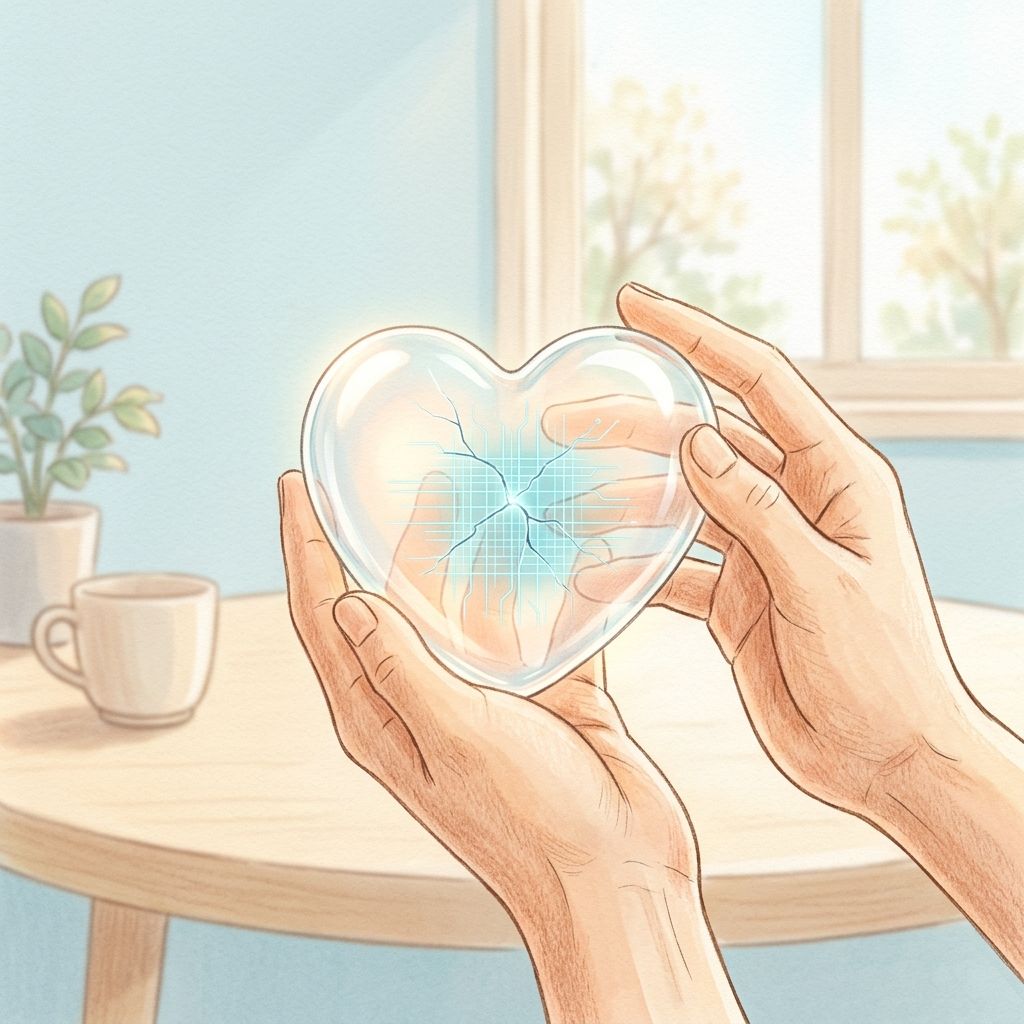
Think back to a video you recently saw on social media. When the comment “Is this AI?” appeared underneath, how did you feel?
A few months ago, this might have been a humorous tease or a running joke, but now, is everyone’s first reaction upon opening a video to stare at the background text to see if it is distorted, check if the number of fingers on a person is correct, or even search for the flaw of a hand suddenly flying to the other side in a push-up video?
We seem to no longer purely enjoy content, but are instead “catching the fox’s tail.”
This psychological shift from appreciation to scrutiny is announcing a severe shaking of the foundation of internet trust.
The Rupture of Trust: When Pixels Are No Longer Worth Believing
On the internet, the strongest relationship between creators and the audience is trust.
Because you believe that behind the screen is another human’s true feelings or painstaking effort, you will be moved.
Because you believe that it is a moment carefully captured by someone or the result of years of research, you will generate a strong resonance and appreciation.
When the audience’s first instinct becomes doubt, this emotional connection is broken.
Once our first emotion upon opening any content becomes a question mark, we have already detached from the author’s intended emotional flow and instead invested energy and physical effort into debating authenticity.
The greatest leverage of the internet is actually trust.
However, current forgery technology has become indistinguishable from reality.
Take a fake chat record as an example. What AI simulates is not only the software interface, but even the fingerprints on the screen and the physical texture of the phone appear as if they were real.
The popularity of this extreme forgery makes the public involuntarily stop trusting content on the internet.
This is a fundamental mistrust, a pixel-level guard where not even a single pixel can be trusted.
Although high-quality AI artistic creation exists in the market, the influx of a large amount of low-quality AI content has given the public a stereotype of “lazy, cheap, and shoddy” regarding AI.
This is undoubtedly a silent tragedy for those original creators who invest a thousand times more time in manual creation.
When your hard work is easily questioned as being AI-generated, the positive cycle of creation is completely weakened.
The Disappearing Barrier: When AI Models Take Over Software, Do Humans Still Need to Learn?
What is even more worrying is the AI model revolution we are currently experiencing.
In the current technical environment, AI is no longer just a tool to assist in generating content; it has begun to directly take over software operations, and even completely dismantle the professional software skill barriers that once made people proud.
In the past, mastering the operations of complex professional software was a knowledge barrier for practitioners to establish themselves in the workplace.
Now AI is turning these traditional large software applications into its own “plugins.”
Users no longer need to master complex operations. Simply through natural language instructions, AI can install software by itself, take over the mouse and keyboard, and help you complete all complex processes.
While this de-barrierization of skills brings about the liberation of productivity, it also brings deep anxiety to professionals.
When the skills you spent years of hard work learning appear insignificant in the face of AI’s execution power with natural language, the sense of value of knowledge is undergoing a severe collapse.
If everyone can obtain equivalent software operation results through AI within a few minutes, where will the uniqueness of individual creation retreat to?
When general-purpose AI begins to take over software in various industries, it will inevitably change how every one of us views all works.
We will more deeply question the gold content of every work, because that most fundamental reproducibility has been completely changed.
One-Minute Deconstruction: The Desperate Plight of Original Content in the Era of Reverse Prompting
AI to original content most fatal blow lies in its ability to quickly “reverse” and “deconstruct” originality.
The core of this technology lies in reverse prompting.
No matter if it is a viral original video carefully shot by a real person or painstakingly produced by AI, as long as it is thrown to AI, it can be precisely dismantled into text prompts within a minute.
Subsequently, AI can copy and generate thousands of similar but slightly different clone works in a very short time.
This means that the original creator’s attention will be rapidly diluted and swallowed in an instant by countless accounts utilizing AI to copy and clone.
Original works are ruthlessly covered by massive copies
Before the real original work is finally delivered to the audience, the audience might have already grown tired similar themes, and even under fatigue,
default to labeling the true original as a “cheap AI product” as well.
This rapid copying and flattening is causing originality to lose its due dignity and return in the ocean of massive information.
We can clearly contrast the content production models before and after this revolution with the following table:
| Evaluation Dimension | Traditional Manual Creation Mode | AI Reverse Copy Mode |
|---|---|---|
| Production Cycle | Input of days, months, or even years | One-minute reverse prompting, instant mass production |
| Technical Barrier | Need to master complex professional software and operation curves | Only need to use natural language to issue instructions |
| Propagation Effect | Single original work spreads, accumulating real emotional connections | Massive accounts dilute attention |
| Audience Psychology | Emotion and resonance first, establishing a trust bond | Doubt and scrutiny first, searching for detail flaws |
Reconstructing Law and Rights After the Change of Production Logic
With the fundamental change in production logic, the traditional legal framework has appeared powerless.
When AI can perfectly simulate human creation paths, the boundary between original and generated will be completely blurred.
In the current situation where AI is deeply involved in creation, attempting to identify and defend rights through traditional copyright has become extremely difficult and impractical.
In the past, the essence of creation originated from the differences generated by human life experiences, which were unique and uncopiable prints of individual lives. However, AI is rapidly flattening these differences built by life experiences.
Therefore, our legal boundaries for copyright may be about to usher in a complete reconstruction.
In a future where traditional copyright protection gradually fails, the defense line of the law may shift as follows:
| Right Type | Faced Challenges and Future Positioning |
|---|---|
| Copyright | Facing identification difficulties, hard to prevent reverse deconstruction and fine-tuning copying within one minute |
| Portrait Rights | Becoming the core line of defense to prevent personal features (portrait, image) from being abused by algorithms |
| Right of Reputation | Protecting personal reputation from realistic synthetic videos and fake pixel information |
This shift in the focus of rights is not only a challenge at the legal level, but also a large-scale transformation of true human life experience by AI technology.
In the Post-Trust Era of Pixel-Level Mistrust, Re-searching for the True Soul of Humanity
Facing this menacing content trust crisis, although various governments have rapidly implemented regulations such as “content labeling” and “platform supervision”, which are indeed necessary and correct responses,
but the speed of AI technology evolution is ridiculously fast, making supervision very tricky and difficult to cope with.
When we enter an era where any painstaking effort can be instantly dismantled and reorganized, and even “human feel” can be perfectly simulated, we must begin to seriously ponder:
When every tear and every deep emotion can be precisely simulated by algorithms, how can we prove that we still possess true perception and souls?
In the post-trust era of pixel-level mistrust, perhaps we can no longer rely on external pixels to prove what is real.
Only those interpersonal interactions that transcend digital screens and return to real life, along with that sincere soul full of flaws and warmth injected by creators into their works that cannot be reverse-prompted, will become our final sanctuary.