In an era where the AI wave hits with earth-shattering force, modern parents’ anxiety has reached its peak. We often ask: “Will my child be replaced?” “What should I let them learn to survive?”.
We rush to fill them with knowledge, but often ignore that what truly makes children stand out in the future are those “soft skills” that AI cannot learn
Such as curiosity, empathy, grit, and powerful intrinsic motivation.
But how can these abilities be taught?
In fact, they cannot be “taught”, but must “grow” from a parent-child relationship full of security.
Today, I want to share a kind of “Parenting Counter-Thinking” to take you to re-see your child, and also re-see yourself.
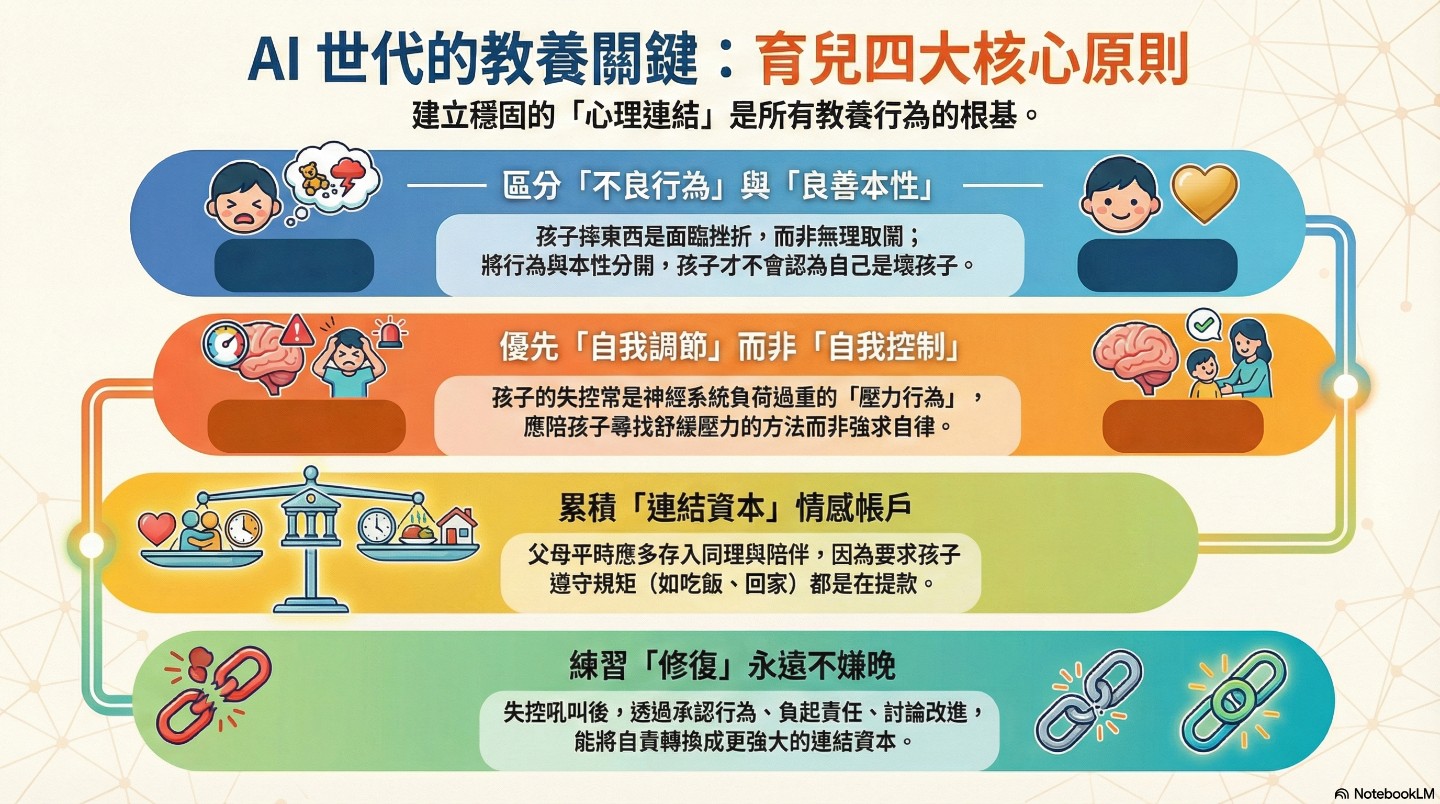
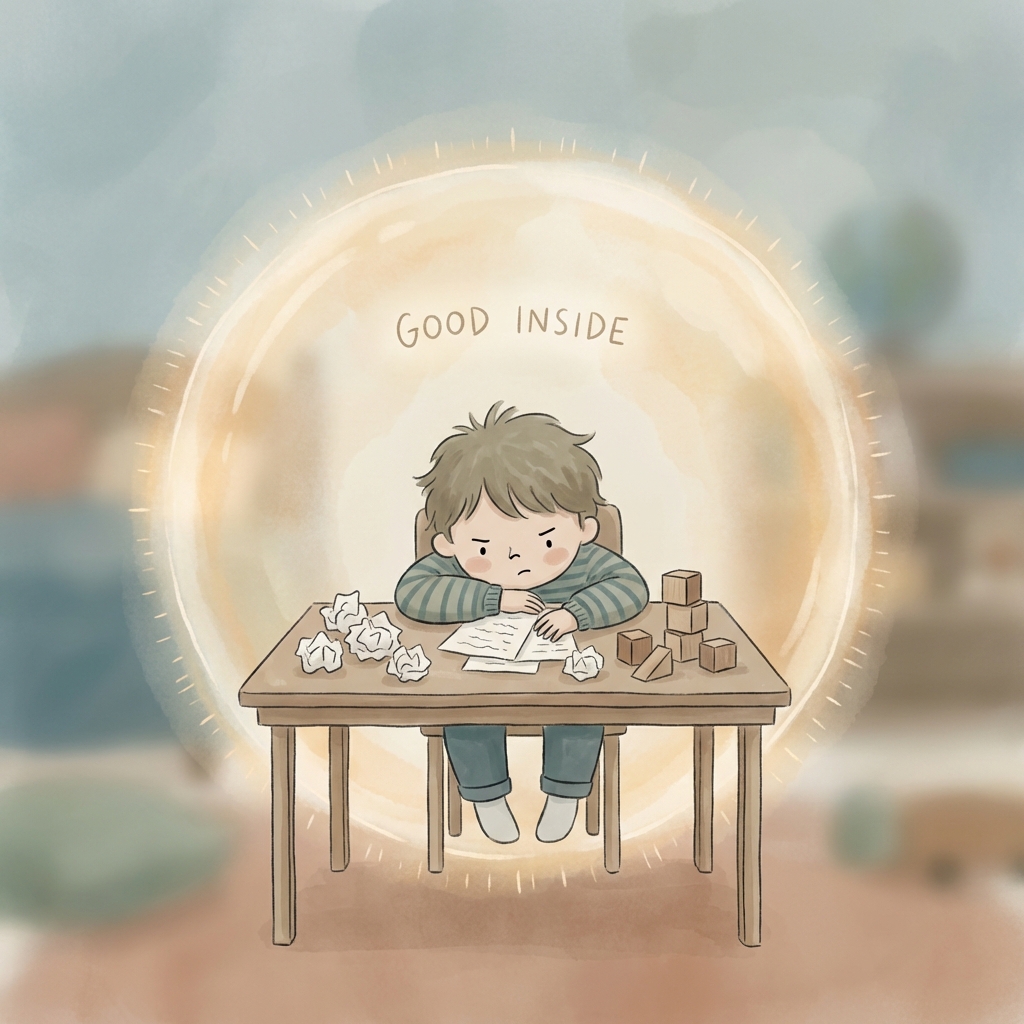
Seeing “Good Inside”: Separating Behavior from Essence
The core soul of the “Good Inside” parenting philosophy is just one sentence:
“We and our children are naturally Good Inside.”
Many parenting dilemmas stem from our habit of “labeling” children.
When a child cries and throws things because they didn’t write their homework well, if we scold them for being “procrastinating” or “impatient”, the child will internalize these negative labels. But from a psychological perspective, this is not making trouble out of nothing, but because the child’s prefrontal cortex is not yet fully developed, and they lost control “involuntarily” when facing frustration.
Practical Tool: Most Generous Interpretation (MGI)
When a conflict occurs, please recite silently in your heart first:
“What is my most generous interpretation of what just happened?”
| Item | Description |
|---|---|
| Case | The child breaks down because the homework is not written beautifully. |
| Most Generous Interpretation | He is not a bad child, he is a good child who has high standards for himself and is suffering from “wanting to do well but failing”. |
This change of mind can build the child’s psychological safety, allowing them to face the high-pressure competition of the AI era in the future
Brave to try and unafraid of failure
Turning from “Self-Control” to “Self-Regulation”
Traditional parenting is used to using rewards and punishments to require children to be “self-disciplined”. However, this method of “punish if bad, reward if obedient” is essentially only dealing with surface behaviors, but ignoring internal stress.
Dr. Huang Congning and Professor Stuart Shanker advocate that out-of-control behaviors should be viewed as “stress behaviors”. The focus is on “Self-Regulation (Self-Reg)”, which is accompanying the child to find ways to relieve stress. Children’s stress sources usually come from five aspects:
| Source | Description |
|---|---|
| Biological Stress | Hunger, lack of sleep. |
| Emotional Stress | Frustrated, feeling sad. |
| Cognitive Stress | Coursework is too difficult, not meeting expectations. |
| Social Stress | Peer relationships are not going well. |
| Pro-Social Stress | Stress of having to meet moral standards. |
Understanding the sources of stress, we can use specific “four steps” to catch the child’s emotions:
| Step | Name | Description |
|---|---|---|
| 1 | Something is wrong, opportunity comes | Detect signs that the child is about to explode, intervene in advance |
| 2 | Let me guess, is it like this | Use empathetic inquiry to confirm feelings |
| 3 | So that’s it, it has a name | Name the emotion (e.g., frustration, depression) to help the child understand their heart |
| 4 | Become better together | Provide specific regulation strategies (e.g., hug to recharge, deep breath, or change environment) |
Connection Capital and Repair: The Most Important Thing in Parenting
The parent-child relationship is like an “Emotional Account”. As parents, asking children to do things they don’t like every day is “withdrawing”.
If we don’t deposit actively, the account will be overdrawn, and the child will become harder to communicate with.
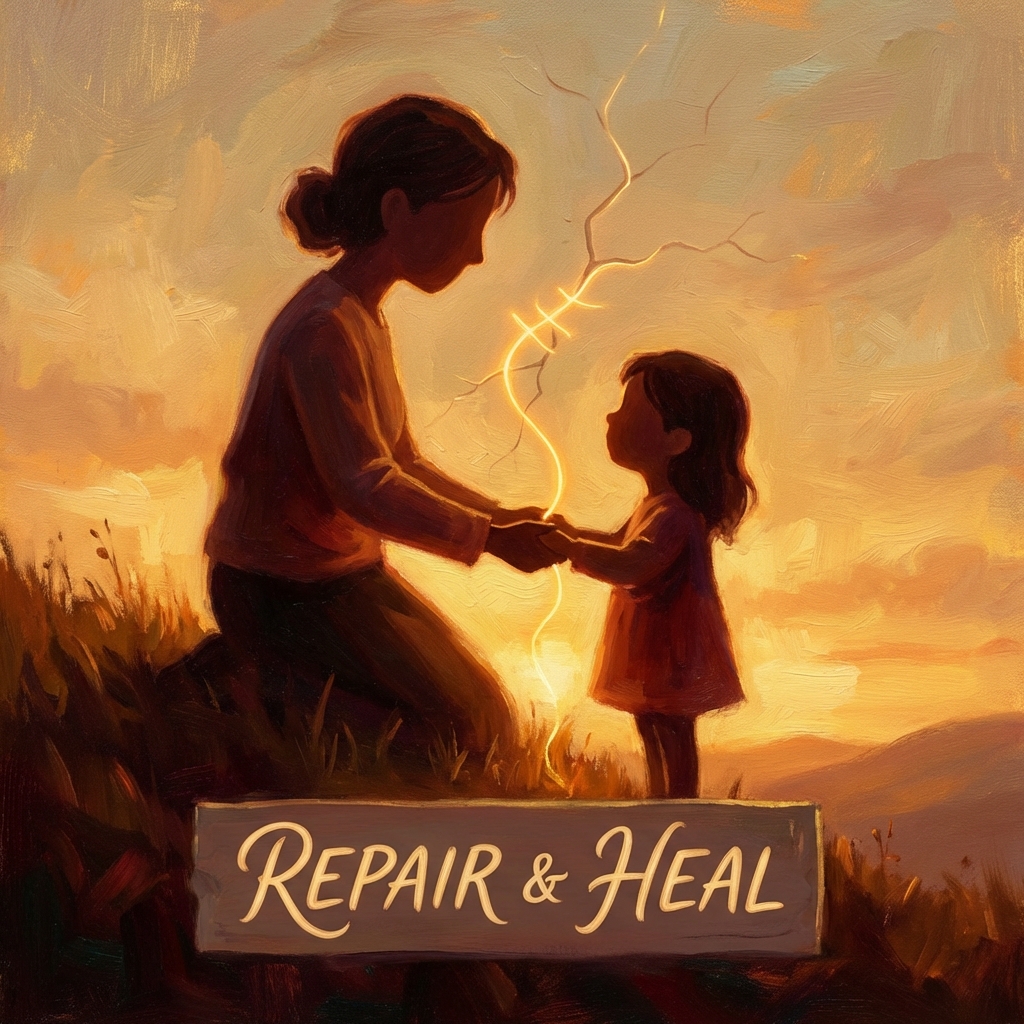
But parenting doesn’t mean parents have to be perfect, the key lies in “Repair”. Dr. Becky Kennedy emphasizes that repair is more important than not making mistakes.
Deep Steps of Repair:
| Step | Name | Description |
|---|---|---|
| 1 | Repair Yourself | Forgive the out-of-control self first. Tell yourself: “I am a good parent who lost control momentarily under multiple stresses.” |
| 2 | Repair Connection | After both sides calm down, honestly describe what just happened, take responsibility (e.g., “Dad was too fierce just now, sorry”), and discuss what can be done in the future. |
This repair itself is the best demonstration of emotional regulation for the child.
It is also healing that self who was not well caught emotionally in childhood.
Conclusion: Planting Seeds of “Forgiveness” and “Connection”
In the AI era, what is most scarce is no longer knowledge reserves, but resilience and sensitivity. When we can practice these four principles:
- Seeing Good Inside
- Guiding Self-Regulation
- Accumulating Connection Capital
- Bravely Practicing Repair
We are planting the most powerful confidence for our children.
It is never too late to repair connections. Every apology and understanding is telling the child:
No matter how the world changes, this is always your safe fortress!